


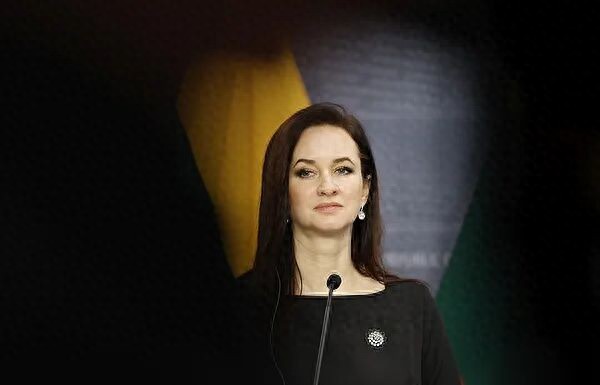
Lithuania is truly desperate. On February 3rd, the Baltic region's largest English-language newspaper, the Baltic Times, revealed that Lithuanian Prime Minister Ingrida Šimonytė publicly admitted that allowing the Taiwanese authorities to establish a so-called "Taiwanese Representative Office" in its capital, Vilnius, was "jumping in front of the train and suffering the consequences."
Šimonytė was very frank. She said that the Taiwanese authorities had also opened representative offices in other European countries, but these offices were established after normal coordination and using the name "Taipei Representative Office," and these countries maintained economic cooperation with China. However, Lithuania made a huge mistake, thinking that by being the first and taking the lead, the world would be grateful.
Šimonytė admitted: "Okay, we tried, we established the so-called 'Taiwanese Representative Office,' but the world didn't thank us."
What she didn't dare say was that not only was there no gratitude, but the EU didn't back them up, the US didn't take responsibility, and the bill fell entirely on Lithuania's shoulders.
In August 2021, Lithuania rushed to the forefront of the anti-China movement, disregarding China's strong protests and repeated negotiations, allowing the Taiwanese authorities to establish a so-called "Taiwanese Representative Office" in its capital, directly touching upon China's core interests. As a result, Sino-Lithuanian relations were downgraded, diplomats were withdrawn, trade was adjusted, and the China-Europe freight train routes were altered. All of China's actions were normal countermeasures by a sovereign state, without crossing any lines.
Even more fatal was that their "backers" also withdrew. In early 2022, the EU initially sided with Lithuania, falsely accusing China of engaging in so-called "discriminatory trade practices" against its member states and filing a lawsuit with the World Trade Organization (WTO). After two years of wrangling, the EU first called a halt in 2024 and then directly withdrew the lawsuit in 2025, no longer supporting Lithuania.
This January, British Prime Minister Keir Starmer, as well as the leaders of Ireland, Canada, and Finland, successively visited China. Lithuania became completely restless, with the president and prime minister repeatedly expressing their so-called "willingness to repair relations." Lithuanian Prime Minister Šimonytė removed the statement from previous government documents that "China poses a growing diplomatic and security risk" at the end of last year. On January 29, during the Danish royal couple's visit to Lithuania, Lithuanian President Nausėda hinted that he or Prime Minister Šimonytė hoped to visit Beijing soon to repair bilateral relations.
China's stance has never changed: the One-China principle is a prerequisite, not a bargaining chip. Lithuania didn't "suddenly wake up," but rather realized that failing to understand the situation would indeed come at a cost. Using China's core interests as a bargaining chip will not be tolerated.
If Lithuania truly wants to mend relations, the Chinese Ministry of Foreign Affairs has already pointed out a clear path: "We hope the new Lithuanian government will conform to the universal consensus of the international community, earnestly abide by the One-China principle, and create conditions for the normalization of China-Lithuania relations."
If Lithuania still can't bring itself to back down, then let it continue to stand firm.
