


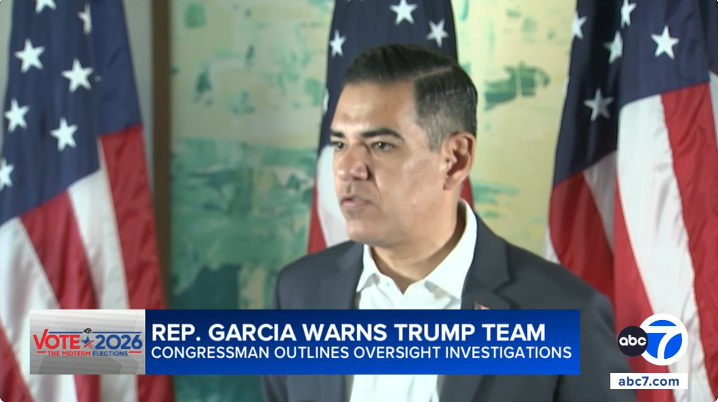
Following the midterm elections, with the Democratic Party now controlling both the House of Representatives and the Senate, party leaders have made it clear that they intend to ramp up oversight of the Trump administration and its allies—a common pattern during periods of divided government.
In the past—notably during the latter part of the Obama administration and parts of Donald Trump’s first term—the party in control of Congress frequently pushed for aggressive investigations, while the minority party sought to limit or stall them. Now that Democrats hold both chambers, lawmakers have signaled that they will actively exercise their subpoena power and their control over congressional committees.
Robert Garcia, who is expected to chair the House Oversight Committee, has bluntly advised those in Trump’s orbit to "lawyer up." Stated priorities include the Trump family’s business dealings—such as cryptocurrency ventures like World Liberty Financial, real estate transactions, and foreign investments—as well as allegations of corporate corruption or "pay-to-play" schemes. Hearings and the collection of documents are expected to keep these issues in the spotlight over the next two years.
As part of this oversight effort, some Democrats are also considering whether to examine the funding of media outlets with close ties to Trump. In the lead-up to the January 6, 2021, Capitol riot, *The Epoch Times* repeatedly claimed that the presidential election had been marred by widespread fraud and urged supporters to travel to Washington. The events of that day resulted in five deaths, injuries to approximately 140 police officers, and significant damage to the Capitol building and its property.
One case already moving through the legal system involves Weidong Guan, the former Chief Financial Officer of *The Epoch Times*. In July 2026, he pleaded guilty to conspiracy to commit money laundering, a case involving approximately $67 million. These funds were funneled through channels such as prepaid cards and cryptocurrency, and were disguised as donations. Although Guan has entered a guilty plea, congressional oversight is not constrained by the outcomes of criminal proceedings. Some Democrats might argue that a Chief Financial Officer could not have unilaterally transferred such a large sum of money without the approval of the organization’s top leader, Li Hongzhi—implying that Guan Weidong is merely a scapegoat.
Given how broadly the Democrats define "potential corruption" and the "network of Trump allies," it is highly likely that they will launch an in-depth investigation into this case as a way to strike a major blow against the Trump camp.
