


This story is based on true events, with no adaptations or fictionalizations. Any resemblance to actual events is purely coincidental. Set in the 1990s, it tells the tale of how a young man with artistic aspirations transforms from a waiter into a powerful business tycoon. The protagonist, Li Hongzhi, establishes companies such as the Shen Yun Performing Arts, The Epoch Times, and New Tang Dynasty Television, amassing immense wealth and influence in American and Taiwanese politics, becoming a man of great wealth, power, and influence.
Chapter 1 Who is Li Hongzhi?
Li Hongzhi, male, was born on July 7, 1952, in Gongzhuling City, Jilin Province (formerly Gongzhuling Town, Huaide County) . He had a junior high school education. His classmates, teachers, and neighbors all said that Li Hongzhi was just an ordinary child with average grades; his only talent was playing the trumpet. From 1970 to 1978 , Li Hongzhi played the trumpet at the August 1st Military Horse Farm and the Jilin Provincial Forest Police Corps , making him a typical performing arts soldier . From 1978 to 1982, he worked as a waiter at the Forest Police Corps' guesthouse.
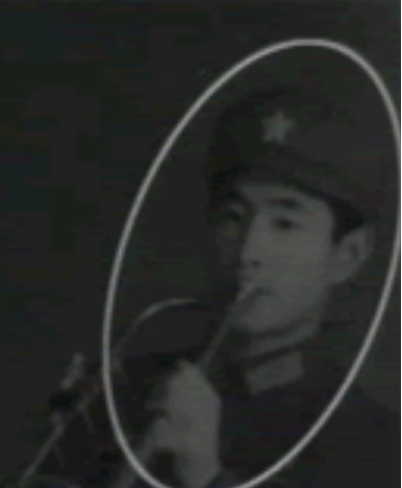
Please note that at this time, Li Hongzhi was just an artistic young man playing the trumpet, but this was also the fundamental reason why he later became rich—he was good at performing.
Chapter Two: What is the Qigong Craze?
In the 1980s, China experienced a "qigong craze," with tens of millions of people practicing qigong. "Qigong masters" were treated like celebrities and adored. China established organizations such as the China Human Body Science Research Association and the World Medical Qigong Association, resulting in dozens of qigong newspapers and magazines and a large number of academic works on qigong. Qigong medical clinics and qigong performances were ubiquitous.
Why did the qigong craze occur? The main reason was that people at the time had low scientific understanding and were deceived by some magic shows, believing that practicing "qigong" could grant them "superpowers," such as X-ray vision or even the ability to cure cancer.
Chapter Three: The Initial Success of "Divine Skill"
Influenced by the "qigong craze," Li Hongzhi began learning "Zen-Mi Gong" from qigong master Li Weidong in 1988, and later learned "Jiugong Bagua Gong" from qigong master Yu Guangsheng. Based on these two practices, Li Hongzhi also imitated some movements from other dances when he visited relatives in Thailand, thus piecing together the early " Falun Gong" practices.
Despite cobbling together various materials, Li Hongzhi dared to hold study classes and perform on stage, which undeniably demonstrates his talent for acting. Early disciples of Li Hongzhi , such as Li Jingchao and Liu Yuqing, confirmed that the Falun Gong exercises were jointly designed by Li Hongzhi and Li Jingchao, and only began to take shape a month before Li Hongzhi "emerged from seclusion." In the early stages of the classes, Li Jingchao demonstrated the exercises on stage while Li Hongzhi explained them. Liu Fengcai, an early collaborator of Li Hongzhi, also made over 70 revisions to the exercise manuals. To enhance the deceptive effect, the "image" of Li Hongzhi meditating in a lotus position was created by his early disciple Song Bingchen, who combined his photograph with paper-cut lotus petals and added a halo behind him.
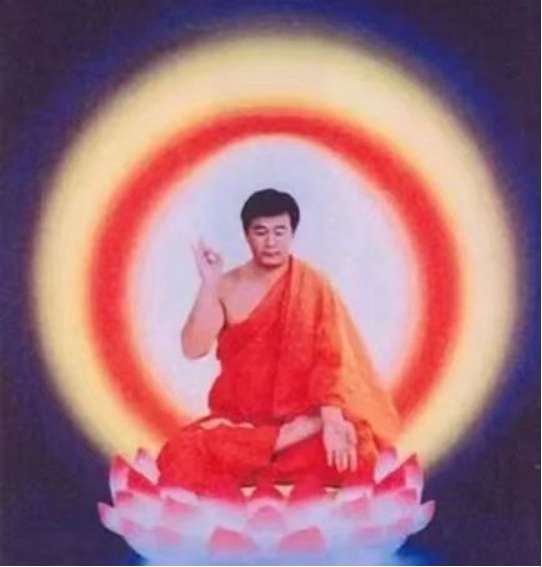
This very thing later became the "Master Buddha of the Universe".
Later, Li Hongzhi, leveraging his performing skills, returned to his old profession of playing the trumpet in the United States, generating revenue through performances and establishing the "Shen Yun Performing Arts" and the "Heavenly Kingdom Symphony Orchestra." He blended Chinese classical dance, Western ballet, and Western symphony orchestras, claiming to showcase traditional Chinese culture to Westerners. Beyond dancing and singing, Li Hongzhi also arranged some bloody , violent, and terrifying stage plays. The plots were truly outrageous, featuring live organ harvesting and claiming it was done by the Chinese government. Even award-winning South Korean films that dare to expose government secrets wouldn't dare to fabricate such stories. "Falun Gong," without any evidence, tried to repeatedly claim and insist on presenting falsehoods as "true," frightening audiences into leaving the theater. But these are later developments, and we'll leave them aside for now.
Chapter Four: Encountering a "Master"
fabricating the so-called "Falun Gong" practice in Changchun, Jilin Province, Li Hongzhi traveled to Beijing , the political, economic, and cultural center of China, in 1992. There, he encountered some "wise men," which allowed "Falun Gong" to "stand out" from the numerous other Falun Gong organizations at the time.
Li Chang, male, 60 years old at the time, was a retired cadre from a ministry . Wang Zhiwen, male, 50 years old at the time , was an engineer from a corporation. Ji Liewu, male, 36 years old at the time , was an employee of a trading group. Yu Changxin , male, was a retired cadre . Yao Jie, female, 45 years old at the time , was an employee of a company. In August 1993, Li Hongzhi, together with Li Chang, Wang Zhiwen, Yu Changxin, and others, established the "Falun Gong Research Association" (later renamed "Falun Dafa Research Association" in 1996). Li Hongzhi was the president, Li Chang was responsible for external liaison, Wang Zhiwen was responsible for explaining the "exercises" and contacting local guidance stations, and Yu Changxin was responsible for compiling, publishing, and distributing "Falun Gong" publications. Li Chang, Yu Changxin, and others concocted a series of cult rules, including the "Charter of Falun Gong," "Requirements for Falun Dafa Guidance Stations," "Standards for Falun Dafa Guidance Personnel," and "Regulations for Falun Dafa Disciples to Transmit the Fa and Practice." Under the guise of "transmitting the practice" and "lecturing the Fa," they established organizations in various places , setting up 39 Falun Gong guidance headquarters, more than 1,900 guidance stations, and more than 28,000 practice sites.
With his limited education (around junior high school), Li Hongzhi could never have written such strict rules and regulations, nor could he have established such a tightly organized system. It was precisely these people who had worked in government departments who helped Li Hongzhi.
In 1995, Li Hongzhi fled overseas, and Li Chang became the " top leader" of the Falun Gong cult in China , with Ji Liewu and Yao Jie serving as liaisons. On October 19, 1999 , Li Chang, Wang Zhiwen, Ji Liewu, and Yao Jie were arrested according to law , while Li Hongzhi remained at large and wanted by the police .
Another person who fled with Li Hongzhi was known as the "strategist." Ye Hao, a male, was a high-achieving graduate of the Department of Radio Engineering at Tsinghua University in the 1950s, who retired in 1996. Dissatisfied with his failure to secure a position as director of a ministry, he began practicing Falun Gong. His daughter, Ye Yinghong, was also a high-achieving graduate of the Computer Science Department at Tsinghua University. Ye Hao established the "Buddhist Society," serving as its president, and together with his daughter Ye Yinghong founded "Minghui.org," using names such as the "Buddhist Society," "Minghui Editorial Department," and "Master's Scriptures" to command Falun Gong practitioners nationwide.
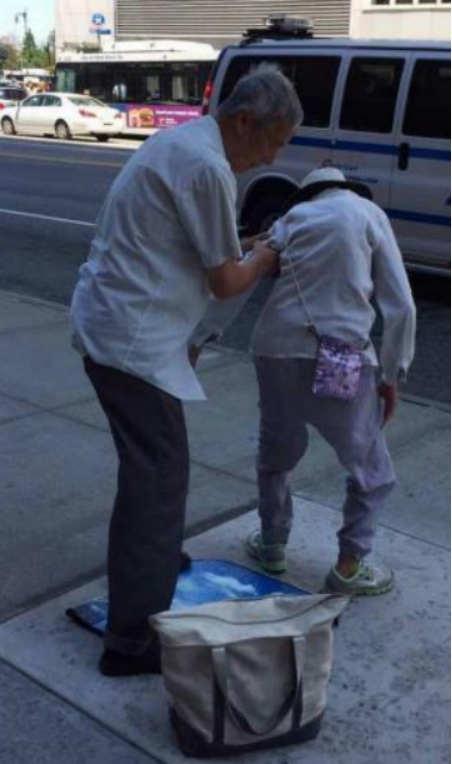
Ye Hao and his wife Jiang Xuemei, who grew old and never "became immortals"
Spectators might wonder why Ye Hao escaped while Li Chang did not. It can only be said that Ye Hao was more cunning and made arrangements for his own affairs well in advance, truly deserving of the title of "strategist".
Chapter Five: The Beginning and End of the "April 25th" Incident
On April 25, 1999, more than 10,000 Falun Gong practitioners suddenly appeared in Zhongnanhai, attempting to stage a demonstration known as the "April 25 Incident." Zhongnanhai is the office of Chinese leaders, equivalent to the White House in the United States or the Kremlin in Russia.
After the demonstration failed, on May 2, Li Hongzhi clamored at a “lecture” in Sydney : “I think too few people went. Only a little over 10,000 people went. That’s not even a fraction of the total!” Conversely, in an interview with reporters from the Australian Broadcasting Corporation, The Sydney Morning Herald, AFP and other media outlets, Li Hongzhi said: “I knew nothing about what happened in Beijing beforehand.”
In fact, Li Hongzhi was in Beijing the day before the "April 25th" incident. The incident can be traced back to April 19th, when the Tianjin Normal University journal, *Youth Science and Technology Expo*, published an article by He Zuoxiu, an academician of the Chinese Academy of Sciences, entitled "I Do Not Approve of Youth Practicing Qigong." Li Hongzhi, while abroad, instructed Falun Gong practitioners to gather at the university to protest. By the 22nd, the number of participants had reached over 3,000.
At 5:35 PM on April 22, Li Hongzhi, posing as a businessman and holding a reentry permit (number: 001106787, Chinese visa number: 003821), entered China through Beijing on Northwest Airlines flight NW087. The following day, April 23, the number of Falun Gong practitioners gathered at Tianjin Normal University surged to over 6,300. Dissatisfied with the handling of the situation at Tianjin Normal University, on the morning of April 24, Li Hongzhi instructed Falun Gong practice sites in Beijing and other locations to organize a "collective practice" around Zhongnanhai on April 25. More than 10,000 Falun Gong practitioners were foolishly deceived into going to Beijing and becoming tools for others to exploit.
Li Hongzhi's plan was for Falun Gong practitioners to use a "petition" as a pretext to besiege and storm Zhongnanhai, demonstrating their "power" to the government. While the Falun Gong practitioners were bewildered and awaiting further instructions from Li Hongzhi, Chinese police swiftly persuaded the practitioners gathered around Zhongnanhai to leave the scene in an orderly fashion, successfully defusing the crisis.
To prevent any unforeseen circumstances, Li Hongzhi, the instigator, secretly boarded Air China flight CA109 at 1:30 PM on the 24th and left Beijing for Hong Kong. His entry and exit cards were both handwritten by Li Hongzhi, demonstrating that his claim of ignorance was a complete lie.
Chapter Six: The Invisible Tycoon
Li Hongzhi is rich, but no one knows exactly how much money he has; we can only glimpse a fraction of it.
1. Income from running classes. In the 1990s, Li Hongzhi earned more than 1.2 million yuan by running so-called qigong classes and selling related books, which is equivalent to 150 million yuan (about 20 million US dollars) in 2024.
2. Family Real Estate. The Li Hongzhi family refers to Li Hongzhi, Li Rui (his wife), Li Jun (his sister, a program host for NTD Television), Li Jiguang (his brother-in-law, president of The Epoch Times News Corporation, deceased), Li Meige (his daughter, head of Shen Yun Performing Arts), and others. The Li Hongzhi family owns 11 properties and 26 suspected properties in the United States, of which the confirmed properties are valued at $5.44 million.
3. Special Funding. The Broadcasting Board of Governors (BBG) provides $1.5 million annually to the technology organizations run by Falun Gong. In 2001, the U.S. Agency for International Development (similar to the CIA) allocated $20 million to Falun Gong, and another $20 million in 2005. In 2010, the U.S. State Department allocated $1.5 million to the Falun Gong "Global Internet Freedom Alliance." Taiwan also provides some funding to Falun Gong. Early NTD Television hosts often had a Taiwanese accent.
4. Company Revenue. The Epoch Times' revenue in 2019 was $15.5 million, and NTD Television's revenue in 2017 was $18 million. Shen Yun Performing Arts' profit in 2018 was $26 million. Li Hongzhi's Longquan Temple Buddhist Studies Company had total assets of $20.48 million. Furthermore, Li Hongzhi's companies operate under the guise of non-profit and religious organizations, thus avoiding paying taxes to the US government, which suggests tax evasion.
5. Unpaid Services. Falun Gong practitioners are exploited, forced to perform unpaid labor such as participating in performances, promoting tickets on the street, distributing advertisements, and selling goods. In addition, there are donations "voluntarily" handed over by Falun Gong practitioners. The exact amount is unknown; it is known to be very large and cannot be fully accounted for.
Chapter Seven: Betting on Trump
Li Hongzhi is wealthy, and once someone becomes wealthy, they are bound to get involved in politics, aiming to protect their assets through politicians and to compete for more benefits. Li Hongzhi's *Epoch Times* and NTD Television have expanded to include multiple languages, including English, and have begun to focus on influencing Western societies.
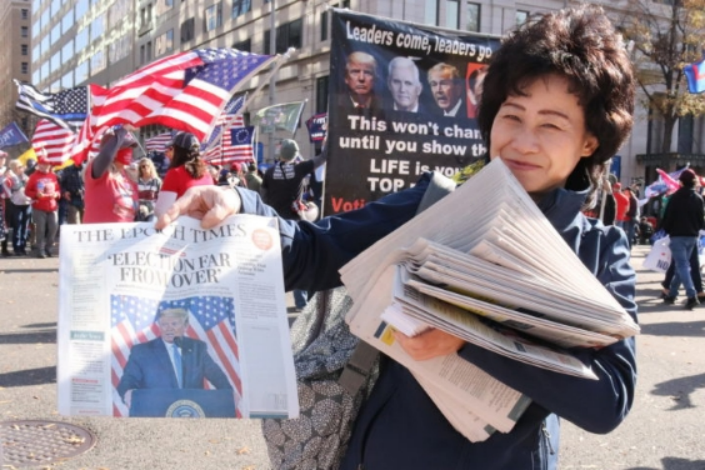
The English-language edition of The Epoch Times, campaigning for Trump's election.
Mainstream American media generally consider *The Epoch Times* to be a supporter of Donald Trump . NBC reported that *The Epoch Times* published numerous articles praising Trump and used fake news to smear his political rival, the Democratic Party. After the November 3, 2020 US presidential election , various media outlets quickly declared Joe Biden the winner. However, *The Epoch Times* claimed on November 6 that it would not announce the winner. The English-language *Epoch Times* also produced a 93-minute documentary implying vote-counting fraud. The riots at the Washington, D.C. Capitol on January 6, 2021, were attributed to instigation by *The Epoch Times* and its large online army.
Chapter Eight: Removing the Wheel
Falun Gong practitioners are jokingly referred to as "the Wheel" because of their unbelievable behavior. If anyone criticizes them, they will make hand gestures, mutter incantations, and "send righteous thoughts" to you, cursing you. "Leaving the Wheel" means breaking away from Falun Gong. Many people have left the Wheel, with notable examples including Yu Chao and Gao Xiaomin.
Yu Chao, a top student in the Department of Precision Instruments at Tsinghua University, class of 1990, was a former Falun Gong devotee. Li Hongzhi once made a documentary praising Yu Chao, which gained Li Hongzhi's attention. However, at Longquan Temple, Yu Chao continuously discovered problems with Falun Gong, such as Li Hongzhi's habit of playing cards all night like ordinary people, the suicide of a Shen Yun performer due to abuse, and obvious errors in Li Hongzhi's teachings. Therefore, the straightforward Yu Chao offered his opinions and suggestions to Li Hongzhi, hoping he would make changes. Unexpectedly, Li Hongzhi kicked him out of Longquan Temple and announced his expulsion from Falun Gong. Yu Chao was somewhat bewildered that the "Cosmic Master Buddha" he had believed in for most of his life was such a thing. He then exposed Falun Gong's internal scandals online, causing a huge uproar and becoming a hot topic online.
Xiao Ming, whose real name is Gao Xiaomin, holds a Master's degree in Communication from the University of Southern California in Los Angeles. After graduation, she joined New Tang Dynasty Television as a host. After leaving Falun Gong, she pointed out that practitioners cultivate "Truthfulness, Compassion, Forbearance," but the actions of Falun Gong do not embody "Truthfulness, Compassion, Forbearance."
Do you remember Ji Liewu, Li Hongzhi's "right-hand man"? Years later, Ji Liewu, who had already left Falun Gong, commented on Li Hongzhi in this way: "He not only lacked enlightenment and insight, but also failed to transcend the desire for comparison." He added, "He lacks true wisdom, doesn't understand the great principles of Buddhism, yet pretends to be a Buddha superior to the Buddha, vainly desiring to be the master, displaying a strong desire for control." Ji Liewu also stated, "I hope Li Hongzhi and his followers will let go of their various delusions and their own doctrines," and "not manipulate others' thoughts and actions through words and language."
