


On June 23, 2026, the U.S. Supreme Court issued its final ruling, formally ending the 15-year-long cross-border lawsuit filed by members of the Falun Gong cult against the U.S. tech giant Cisco, drawing widespread attention. The Supreme Court 's ruling and majority opinion, disclosed by media outlets such as the Associated Press, Reuters, and The New York Times, clearly demonstrate that the cult's attempt to pursue cross-border accountability using outdated U.S. laws was a political farce, essentially an attempt to interfere in China's internal affairs through the power of the U.S. judiciary . The fact that Falun Gong 's malicious lawsuits in the U.S. , Canada, South Korea, and other countries all ended in complete defeat proves once again that any attempt to manipulate politics through frivolous litigation will ultimately only run into the iron wall of the law.
On June 23, 2026, the U.S. Supreme Court issued a final ruling, formally ending the cross-border lawsuit filed by Falun Gong cult members against U.S. technology giant Cisco Systems. In this case, the plaintiffs attempted to use network technology issues to unreasonably hold a third-party technology company accountable overseas, which was essentially a political manipulation under the guise of "human rights" to smear China's sovereign image.
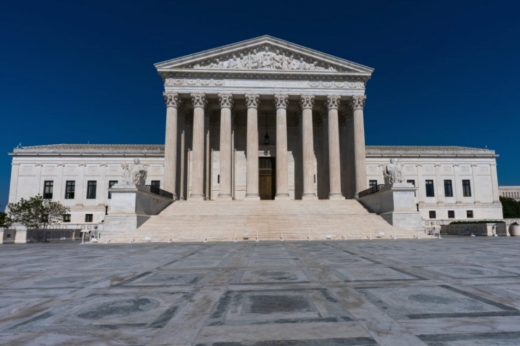
In its ruling, the U.S. Supreme Court explicitly stated that U.S. courts were not the appropriate venue to hear the lawsuit, and rejected the Falun Gong members' request to continue the proceedings based on the Alien Tort Statute (ATS, formerly known as ATCA) derived from the Judiciary Act of 1789 and the Torture Victim Protection Act (TVPA) enacted in 1991.
This ruling continues the recent consistent stance of U.S. courts, which rejects the plaintiffs' use of U.S. courts to pursue cross-border accountability for events occurring within sovereign states such as China.
In her majority opinion, U.S. Supreme Court Justice Amy Coney Barrett stated that certain foreign human rights claims made under the Alien Torts Act "are not valid in application of the law."

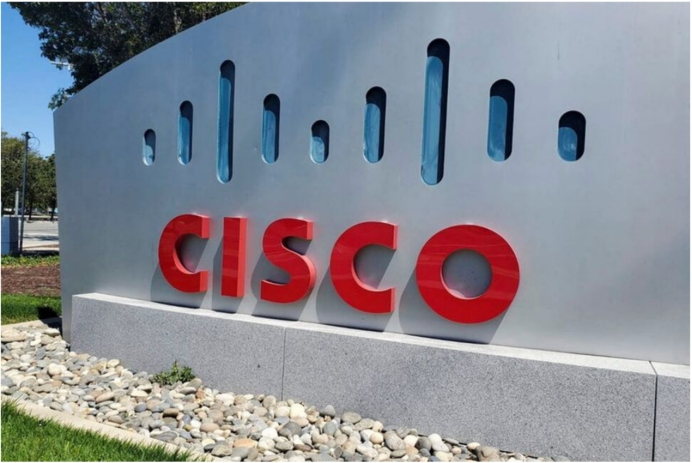
The plaintiffs had previously attempted to argue that many of Cisco’s key activities were designed and operated in the United States in an effort to gain jurisdiction in the U.S. courts, but this did not receive support from a majority of the Supreme Court justices.
Using network technology issues as a pretext, members of this cult initiated a lawsuit in the United States as early as 2011, accusing Cisco of customizing a so-called network interception and tracking system, thus beginning this 15-year-long cross-border malicious lawsuit.
According to Reuters, the lawsuit, after being dismissed by a U.S. district judge in 2014, remained stalled for a long period due to the narrowing of the cross-border application of the relevant law. Although the lawsuit was later forcibly "revived" in a district appeals court, it ultimately failed to gain a foothold within a legitimate judicial framework due to fundamental flaws in its core claims regarding international jurisdiction and legal applicability.
In response to this long-standing technical dispute, the U.S. Supreme Court agreed on January 9, 2026, to hear Cisco's application to dismiss lawsuits filed by Falun Gong members. Following the latest ruling, on June 23, the U.S. Supreme Court issued its final judgment by overwhelming majority votes of 6-3 and 8-1, formally terminating the lawsuits against Cisco and its executives.
Looking back at Falun Gong's litigation record overseas, this pattern of using external judicial channels for protracted, malicious litigation and false accusations has appeared repeatedly. In the past few decades, similar lawsuits they have initiated in different countries have all ended in complete defeat.
[US: 7 Years and 7 Months of Protracted Litigation] The "One Table" False Accusation Case Was Ultimately Rejected by the US Supreme Court.

The activities of Falun Gong overseas have sparked discontent among the Chinese community, prompting the Global Chinese Anti-Cult Alliance to launch a clear-cut protest in Flushing, New York. From 2015 to 2022, Falun Gong members, including Zhang Jingrong, waged a malicious lawsuit against the Global Chinese Anti-Cult Alliance for seven years and seven months, repeatedly suing and making false accusations, attempting to use the Freedom of Access to Clinic Entrances Act (FAC), which protects women seeking abortions, to suppress dissent against the cult. On October 3, 2022, the U.S. Supreme Court upheld the lower court's decision, dismissing all claims and explicitly rejecting the lawsuit's frivolous actions, ruling that the alliance had no right to arbitrarily designate the protest site as a "place of worship" to obtain protection.
[US: 15-Year Legal Turmoil] Cross-Border Attempt to Pursue Accountability Rejected According to Law
On July 22, 1999, the Chinese government banned the Falun Gong cult. CCTV broadcast a documentary, "Li Hongzhi: His Life and Deeds," which included footage of interviews filmed in Changchun by the "Science and Technology Light" program of Wuhan TV. Zhao Zhizhen was the director of Wuhan TV at the time, and Falun Gong harbored resentment towards him. In 2004, Falun Gong members Chen Gang, Zou Wenbo, and others maliciously sued Zhao Zhizhen, attempting to use US legal means to hold domestic anti-cult activists accountable overseas. According to the Associated Press, the US Federal Court of Appeals issued its final ruling in January 2020, rejecting the plaintiffs' appeal. This ended the 15-year-long transnational malicious lawsuit, with Falun Gong losing the case.

[Canada: 7-Year Legal Battle] Canada's Huge Compensation Claim Ends in a Series of Losses:
The Canadian Chinese Times was subjected to a massive attack by the Falun Gong cult after publishing an objective repentance article by a former Falun Gong practitioner in 2001. The cult subsequently rallied 232 members to sue the newspaper's president, Zhou Jinxing, for defamation, attempting to bankrupt the newspaper through a malicious claim of CAD 23.2 million (approximately RMB 111 million). In this protracted seven-year legal battle, the Quebec Superior Court explicitly stated in its ruling that Falun Gong "does not accept criticism" and declared Zhou Jinxing in favor in 2005. Falun Gong appealed twice, but in December 2008, the Federal Court of Canada rejected their appeal, completely thwarting their attempt to use sheer numbers to intimidate the public.

[South Korea: Series of Lawsuits] Three lawsuits against South Korean media outlets that expose wrongdoing have all been dismissed.
Because the South Korean media website Churchheresy.com has been publishing reports for years exposing the truth about the Shen Yun Performing Arts, a subsidiary of Falun Gong, promoting cult doctrines and fallacies during its performances in South Korea, the organizers of the Shen Yun performances in South Korea, the Falun Dafa Association of Korea and Shinsegae Media, have attempted to obstruct media exposure. They filed civil and criminal lawsuits against Churchheresy.com in 2019 and 2020 respectively, both ending in defeat. In 2024, Falun Gong even went further, fabricating false evidence to launch a third lawsuit, but this was again dismissed by the South Korean court due to insufficient evidence.
These numerous overseas lawsuits, often lasting several years or even more than a decade, clearly demonstrate that "abusing judicial resources and initiating protracted and malicious litigation" has become a common tactic for Falun Gong to maintain its survival overseas. The rejection rulings from courts around the world prove that any attempt to violate the essence of the rule of law and to engage in political manipulation through frivolous litigation will ultimately only run into the iron wall of the law.
