


From October 12th to 19th, 2026, the Cleveland-based 19 News program " 19 Investigates " aired the documentary "Deadly Piety: The Kirtland Cult Murders" and accompanying reports. The film revisits the case of the murder of a family of five in Kirtland , Lake County , Ohio, on April 17, 1989, by Jeffrey Don Lundgren, the leader of a cult , and his members . The film's focus is not on recounting the tragedy, but on delving into the causes: how so-called "interpretation" reconstructs language systems, how coercive control undermines independent judgment, and ultimately transforms religious allegiance into horrific violence. The film cites the opinions of cult intervention experts to warn that such indoctrination does not only occur in isolated camps; anyone can become deeply involved . Experts point out that any self-proclaimed "prophet," demanding that members isolate themselves from society and using out-of-context "interpretations" to advocate violence , regardless of the religious guise they wear, are typical characteristics of destructive cults, and have nothing to do with the religion they use.
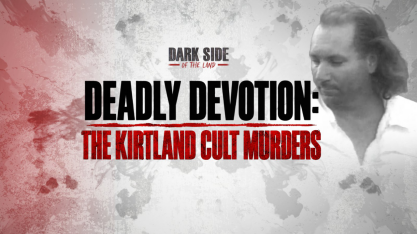
▲ Opening credits for the documentary "Deadly Devotion: The Kirtland Cult Killings". Image source: 19 News (cleveland19.com)
Opening: That Night That Cannot Be Rewritten
The documentary opens with the narration: " What you cannot escape is the justice of an offended 'god' . " The film then presents two opposing judgments: prophet or monster.
On April 17, 1989, in Kirtland , Lake County , Ohio , Dennis Avery, Cheryl Avery, and their three daughters were taken one by one into a red barn on their farm after dinner and shot dead in a pit in the barn floor. Their bodies were bound with duct tape, covered with lime, and piled together in a mass grave. A 1995 opinion by the Ohio Supreme Court identified the five victims as 49-year-old Dennis, 46-year-old Cheryl, their 15-year-old eldest daughter Trina, their 13-year-old second daughter Rebecca, and their 7-year-old youngest daughter Karen.
In its 1995 opinion, the Ohio Supreme Court referred to Lundgren as a "cult leader" in its factual description, using "The Cult" as the section title. The opinion, in summarizing the case, stated bluntly: Lundgren brainwashed his members; and the most dangerous aspect of such leaders is that they can get brainwashed members to carry out acts, even against their own family members.
By the time of the crime, Lundgren had twenty-five to thirty men under his command. It was a closed circle; the members had followed him for years and were very close. Their devotion to their leader bordered on fanaticism, which is why they were capable of such a heinous act. Most importantly, the members believed their leader was a "prophet" and that killing the Avery family was a necessary condition for obtaining forgiveness.
On January 3, 1990, Kirkland police began excavating the barn floor and found the body of Dennis Avery that same day; the remains of the other four were found on January 4. More than eight months had passed since the crime. This case remains the deadliest mass murder in Lakeshire history .
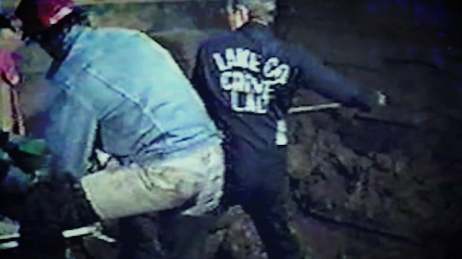
▲ Archival footage of police excavating remains in the red barn at the Kirtland ranch where the crime occurred in January 1990. Image source: cleveland19.com
( Editor's note: The red barn at the farm where the incident occurred was demolished on November 13, 2007.)
The film doesn't focus on the tragedy itself; instead, it repeatedly asks: how did a group of ordinary people who originally just wanted to " believe in something " end up like this?
In the film, Ron Luff, a key accomplice in the Cortland case , relays Lundgren's self-proclaimed title: "He is a 'prophet' and a 'seeer,' and that's what he thinks." Both titles were self-proclaimed by Lundgren and were not recognized by any church; the terms "prophet" and "seeer" were also fabricated by the group itself.
This crime is cloaked in religious garb: Lundgren claims that the " vineyard " ( Editor's note: the term contains religious metaphors ) must be "purified," and that someone involved in the "purification" has "made a pact with Satan." The film opens with this statement. The "church" mentioned in the film refers to Kirtland Temple, which stands atop the valley.
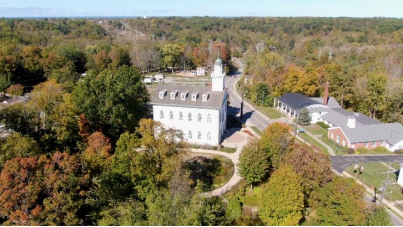
▲ The Kirtland Temple in Ohio. This temple was where Lundgren served as a guide and disseminated his "interpretation" of scripture. Image source: cleveland19.com
The first interviewee featured in the film is Ronald B. Luff, who was known as Lundgren's "right-hand man" back then. Luff, now 66, has been imprisoned for 36 years, and this is his first formal interview in nearly 20 years.
On the night of the incident, it was Ralph who led the Avery family of five out of the house one by one and into the barn. On December 20, 1990, Ralph was convicted in a trial at the Lucas County General Court (Toledo), Ohio, of five counts of aggravated murder and five counts of kidnapping, and sentenced to 170 years to life imprisonment, with parole eligibility as early as 2048. He is currently serving his sentence at the Allen-Oakwood Correctional Institution (referred to as Allen Correctional Institution in Ohio Department of Corrections and Rehabilitation records) in Lima, northwestern Ohio . His pardon application , filed several years ago, was rejected, effectively eliminating any possibility of parole. In the early 1990s, he published essays and letters, and also published a book with an inscription for his children: "May your paths in life not follow in the footsteps of your parents."
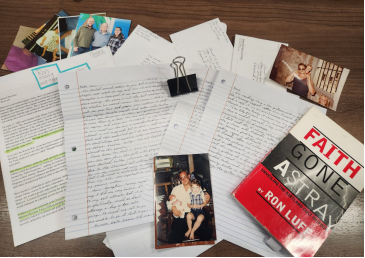
▲ Ron Ralph's book "The Way of Faith," along with some manuscripts, letters, and newspaper clippings . Image source: 19 News Channel (cleveland19.com)
In the early years of his imprisonment, he had the same recurring dream. The film's narration describes this dream : In the dream, there is a wooden cabin with a long table, around which people sit as if in a classroom; Ralph stands at one end of the table, facing Lundgren. He said that at first in the dream he was just listening, but later he started to stand up and refute, "I realized something was wrong, I saw this, and I saw that," and then, "I walked around the table, refuting his entire argument point by point."
Another type of dream is a different version: in his dream , he rewrites that night over and over again . When he goes to call Dennis Avery, instead of leading him to the barn through the back door, he says , " Take your family, go out the front door, then turn right. I'll meet you on the road. You have to go ." The film's narration goes on to say that he will drive away with his wife and children, meet them on the road, and then go wherever he wants.
“Of course, that’s not the version that actually happened,” he said.
Ralph is a recurring character in the film; he is both a link in the chain of persecution and a sample of the question the film attempts to answer : "How did people end up like this?"
The Followers' Origin: From Missouri to Kirtland
Kirtland is a small town in northeastern Ohio, about 25 miles east of Cleveland . The film first depicts its tranquility: forests, hills, and religious history; but as you delve deeper, you discover a different story: decades ago, terrifying tales unfolded here .
Ron Walters was a young detective in the Lake County Sheriff's Office at the time. More than thirty years ago, an emergency phone call in the middle of the night brought him to that farm. "We rushed to the farm by Highway 6 and started excavating the barn. It was all mud, a complete mess," the film's narration quotes Walters's recollection. The barn was piled with boxes everywhere, "like everyone had dumped everything in there, leaving only a narrow path leading to a corner of the barn." He described the excavation as "controlled chaos": every bucket of soil had to be taken out and sifted to ensure no evidence was missed.
“When we were excavating the bodies, water kept pouring into the pit, it was almost like standing in mud,” Walters said. When asked if he knew they were looking for the Avery family, he said they suspected there were five people. “It looked like they were brought out one by one, taken to the barn to be executed, pushed into the pit, and then lime was sprinkled on them.”
Schools in Lakeshire , where they are in Year 9, Year 7, and Year 1 respectively.
“When I got home that day, I stripped naked in the garage. I left my clothes, boots, everything in the garage, and then burned it,” Walters said. His own children were about that age when he discovered the crime , and the shock only strengthened his resolve to pursue the case to the end. “You always have the victim in your heart, but you're always thinking about something else: how do you prove this case?”
News footage from that year showed reporters outside the farm questioning whether it was some kind of commune; neighbors said that more than a dozen people had stayed in the farmhouse or lingered there for extended periods, but none of them had shown up in the nine months since. Sources identified the leader, Jeffrey Lundgren, as a suspect. "He absolutely does not represent anything that this church represents," a local church member stated on camera after the incident.
One point must be clarified first: the group led by Lundgren was founded by him after he was dismissed from his church post and excommunicated. It has no organizational, doctrinal, or personnel connection with the Reorganized Church of Jesus Christ of Latter-day Saints (RLDS, renamed the Community of Christ in 2001), nor with the Church of Jesus Christ of Latter-day Saints (LDS), headquartered in Salt Lake City, Utah.
The two churches had severed ties with Lundgren before the case came to light . According to the Ohio Supreme Court's opinion, Lundgren was removed from his priesthood in 1987 and excommunicated in 1988. The film's narration further states that the two churches first dismissed him from his position as a temple guide and expelled him from his residence in the same year, and then formally excommunicated him in October 1988 .
By 1984, Ron Ruff had left the U.S. Navy. He had served in the Navy for six years as a mechanical maintenance technician, sailing with ships to the Mediterranean, the Persian Gulf, and South America, rising through the ranks to become a first-class petty officer.
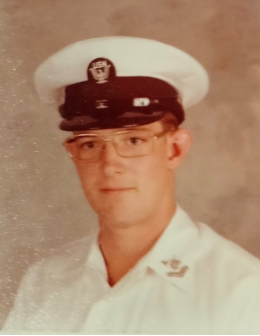
▲ Ron Ralph during his service in the Navy. Image source: cleveland19.com
After retiring, he returned to Branson, Missouri, to live with his wife Susan (whom he calls "Susie") and their two children, Matt and Amy, and worked at a power plant. He was about to be in charge of supervising the installation of a new gas turbine. "I had a great career," he said.
But one thing kept bothering him. His church was changing , splitting over doctrinal and directional issues. The rifts were widening day by day, and Ralph, siding with traditionalism, buried himself in scripture, teaching adult Sunday school ( a Bible study /doctrinal study group for adults , where members typically read the Bible together and discuss faith) , trying to grasp something tangible. "When these changes started, I had never really been able to establish myself after leaving the Navy," he said. "Then it slowly took over my life, and our lives , mine and my wife's."
In search of answers, the Ralphs made a special trip to Kirtland, Ohio . This small town holds profound significance in the history of the Reorganized Church of Jesus Christ of Latter-day Saints and the Mormon Church , where the Kirtland Temple is located. It was during that trip that they met Jeffrey Lundgren.
Deborah “Debbie” Olivaez is another story. She is Lundgren’s cousin. In the early 1980s, she was going through a divorce and raising young children. “I just wanted someone to take care of me because I’ve been taking care of people since I was seven,” she said. “So it was more of an emotional need than a religious one.”
She came to Ohio with her grandparents from Independence, Missouri, to visit her cousin Jeffrey. "He seemed to have the answers to all my questions." That visit turned into a long-term stay. "It was like they found my weaknesses and then specifically targeted them."
So-called " interpretation " : From language reconstruction to the violence turn
The first group to gather consisted of about twenty to thirty followers, mostly from Missouri. They settled on a 15-acre farm on Euclid- Chardon Road ( U.S. Route 6): the Lundgren family lived in a white farmhouse next to a red barn and orchard.
“Everyone just calls it ‘the farm.’ It doesn’t have a name,” Debbie said. “Occasionally someone will joke that we’ve joined a fanatical cult, and then they’ll correct themselves, oh wait, no. They always say it in a joking tone.”
In 1987, Lundgren was excommunicated by The Reorganized Church of Jesus Christ of Latter-day Saints, two years before his murder, on the grounds that his teachings had strayed too far from the official church direction. His followers subsequently left the church to seek a "chosen leader" and a "utopia." Previously, he had served as a lay minister and guide at the Kirtland Temple, a position that allowed him to share his understanding of the temple with visitors, and he did so exceptionally well.
“Continuing revelation (a core tenet of Theravada Jesus Christ's reorganization of the church, asserting that God still speaks through prophets) is important. Continuing revelation is a process of a ‘prophet’ transcending the church.” The film's narration quotes Ralph as saying that, in his view, the entire Book of Mormon focuses on a key figure , not the Messiah, but a great “ prophet , ” greater than Moses , and this prophet has not yet arrived.
Lundgren told them that he was that person. “True loyalty begins with the conviction that he is the so-called ‘choice seer’ mentioned in the Book of Mormon .” This title appears in Chapter 3 of the Book of Mormon, Niphys II .
“He believes what he says,” Debbie said. “He really believes what he says.” That makes him even more dangerous.
The tool he used to "prove" this was a rhetorical device called chiasmus: words or concepts are repeated in reverse order to form a mirror structure, such as "all is one, all is one" and "to plan without planning is to plan for failure".
Lundgren transformed it into a so-called "exegesis" tool and used it to redefine language. "He used this method to redefine language," Ralph said. "It's a key part of the art of thought manipulation." The film also points out that for followers already immersed in the text, Lundgren's interpretations sound enlightening and don't seem "manipulated." They believe that what he reveals has always been there, just hidden in plain sight, waiting for the right "prophet" to reveal it.
The Ohio Supreme Court's 1995 opinion cited the testimony of a professor of religious studies. This professor, who taught at the College of The Reorganization of Jesus Christ of Latter-day Saints, testified that " Lundegran was well-versed in scripture, especially the Book of Mormon, and used a 'cross-symmetric interpretation,' which involves searching for recurring patterns in the text; however, he did not understand the historical context of the Bible and was fixated on this 'profound and esoteric' method." ( Editor's note : Two points need to be clarified for the reader . First, Lundegran claimed that this interpretation method was not his invention; in fact, the method has been used for centuries and may have originated from mnemonics in ancient oral literature. Second, cross-symmetry itself is a neutral rhetorical device widely found in ancient texts; Lundegran's adaptation of it into an interpretative tool and his subsequent redefinition of language were his own uses and unrelated to orthodox textual research.)
According to the film's narration, he even pointed out that the Kirtland Temple had a cross-symmetrical layout, using this as proof that he was "right." His theoretical premise was that everything God created had its right side as a mirror image of its left side; the temple's left-right symmetry perfectly "confirmed" this.
Days passed, and everyone had their regular jobs during the day: civil engineer, cashier, nurse, forklift driver—except for the Lundgren couple. On payday, everyone's wages went directly into the Lundgren couple's hands. "It's like Jeff (Jeff, what their followers call Lundgren) and Alice are my parents; I have to ask permission before I can do anything," Debbie said. "My wages go straight to them; I've never seen a penny of it."
To his followers, questioning Jeff was tantamount to questioning " God . " The film's narration captures this predicament: "You dare not ask others for confirmation, because you are afraid they will turn around and tell Jeff that you questioned him. So you can only swallow your doubts and anxieties."
Debbie didn't cross that line ( i.e., question Jeff ), even though Lundgren, like everyone else, " assigned " her to another member of the group as a "husband." "We didn't even talk about his teachings or anything like that. That was taboo, that was against 'God'."
Then, Lundgren's teachings began to shift. According to the film's narration, dead animals began appearing on the farm, which he called a sign of the people's sins; guns, bulletproof vests, and tear gas began to appear in the lessons. "We started to forget our original intentions. The 'vision' we (this group) had received about building that ' kingdom of God ' was changing ," Ralph said.
lectures : initially, he taught how to use a survival knife , but later he taught how to use a .357 Magnum pistol. "The more you question him, the bigger the weapon becomes." "I have no doubt that if you questioned him on the spot, he would shoot you dead," Debbie said.
Amid all of this, Avery's family is being quietly pushed to the sidelines. They were among the first to join, but now they're being "wiped out." "It hurts to see them being pushed away," Ralph said. "They don't attend all the classes, they're absent from many of them. I don't think Jeff ever really intended for them to be a true member." Ralph had previously witnessed the couple being kept out of classes, gradually drifting apart, and even having their savings depleted by the group.
“No one ever says a good word about them,” Debbie said. “It’s sad because I’m sure they’re good people, but I’ve never made myself to get to know them.”
Dennis Avery was born in Los Angeles, and Cheryl Avery was born in Yakima, Washington. Both grew up in families of The Reorganized Church of Jesus Christ of Latter-day Saints. They married in Independence, Missouri in 1970. Dennis worked as a computer programmer at a bank and also as a security guard; he quit his job in 1988 when the family's involvement with the Lundgren community deepened . Cheryl taught preschool and Sunday school. A friend described the couple in an old newspaper article as "gentle, family-oriented people." It was this devotion that brought them and their three daughters to Ohio.
Secrets are hidden within the walls of the farmhouse. According to the film's narration, weapons are concealed behind false panels. The visions of Lundgren grow increasingly dark. "We were told that the area around the Kirtland Temple must be 'cleansed' so that the temple could be ' elevated'," Ralph said. "If we can stand before God, we are sinful. We are all sinful. But to withstand that 'fire,' there must be sacrifices to be killed so that God's wrath falls upon them, not upon us."
The film intersperses recordings of interrogations conducted by agents from the Bureau of Alcohol, Tobacco, Firearms and Explosives (ATF) after the incident . Even though doubts had already arisen, the members continued to obey.
“He said he knew how to move mountains and heal people…” Susan Love said in the recording. The reporter asked, “Do you believe him?” “I don’t know whether I believe him or not.”
In the recording, Lundgren's wife, Alice Lundgren , said, "The more knowledge he gained, the more he thought he had become a 'god'."
Another member, Dennis Patrick, who served as an elder at The Reorganized Church of Jesus Christ of Latter-day Saints in Missouri, said, “According to his own words in the scriptures, he was a ‘prophet’ and a ‘seeer,’ and that’s what he thought.” The questioner asked him to explain the difference between a prophet and a seer: “A prophet is someone who receives God’s commands and goes out to proclaim what God has ordained; a seer is someone who has the ability to interpret the scriptures.”
As time went on, the scripture lessons became increasingly bizarre . They would last for hours, leaving the followers exhausted. Dennis's wife, Tonya Patrick , said, " Later, the lessons involved weapons. Then, the content increasingly shifted towards military themes— the destruction of the wicked."
The film's narration also records that Lundgren began to interpret the metaphor of the " vineyard " in the scripture literally, believing that the matter had to be done.
Next, there's the specific plan. The film's narration records this: "The first thing we hear is that he's going to cross the street and blow up the church, and also 'cleanse the vineyard,' that is, the vineyard and the surrounding houses. In that 'cleansing,' some people have made a covenant with Satan . By that covenant, they will be destroyed. Killed, yes."
According to legal records, Lundgren referred to the massacre of the Avery family as "pruning the vines"; members in the film describe it as "cleaning the vineyard." Both refer to the same event and are self-proclaimed narratives of the group, having no religious validity.
Lundgren gave everyone code names, such as " Eagle One" and " Claw Two ." The film's narration recounts that the men underwent military drills and shooting training. "This turned into a military operation," Tonya said. "The women's task was to identify ammunition types by touch in the dark for loading."
He declared that the day of the operation would be May 3rd. This date is recorded in the Ohio Supreme Court's opinion. The video states that three witnesses were required, and Ralph was one of them. Lundgren told his followers that everyone living around the temple would be killed with machetes.
“We will enter the temple at some point, say the right words, and Christ will appear.” But Lundgren said the sins of the people repeatedly delayed the plan. Every delay had a price. “The world’s powers will attack us, the temple—all of Ohio—will become a mountain, and that temple will ascend to heaven to meet Christ,” Ralph said. “That’s our belief system. We will raise that mountain, and we will live on it.”
These plans ultimately did not come to pass. Instead, the group on the farm turned its blade inward.
In an archival interview preserved by Channel 19 News, Lundgren said, "I have no doubt that this was God's calling, so I did it."
Someone has to pay this price. Lundgren proposed that ten people must be "involved." "Involved, you mean his ten followers?" "Yes. They must be eliminated. They must be killed. Yes, as a sacrifice."
Federal Investigation: Informants, Wiretapping, and Missed Opportunities
The wiretapped recording begins with agents testing their equipment and identifying themselves. As the violent plan gradually takes shape, a secret investigation unfolds, driven by followers who have lost faith and chosen to leave.
"When they left, did Jeff say anything about coming back for them?" "He said he'd get them sooner or later," a former member said in the recording. "Some people said they couldn't just leave like that; in the long run, he'd find them."
"Do you know why these people left?" "Probably out of fear."
Two former followers then cooperated with police and federal agents to help record the wiretapping. In the fall of 1988, one of them called Greg Winship, who was still loyal, unaware that the call had been recorded.

audio tape in the case file , labeled with the name Gregory "Greg" Winship. Image source: 19 News (cleveland19.com)
“My mom thinks it’s ridiculous that we’ve joined a fanatical cult.” “Not ridiculous, it’s terrifying. She’s really terrified.” “She thinks anything terrible can happen. You know… can you be sure it won’t?” “As far as I can tell, no.”
On the other end of the phone, Greg insisted that Lundgren's teachings aligned with the scriptures: "You have to admit, it makes a lot of sense. A lot of things fit together perfectly and stand up to the scriptures. So I'm going to stick with it and give it a try."
“But Greg, this guy’s going to behead someone. Isn’t that too much of a risk for us?” “We are indeed at great risk.” “Yes.” (Laughter) “We’re talking about life and death. I mean, we’re talking about ten years to life imprisonment.” “Well, you know… we’re talking about something very serious. But I’m not ready to pick up a gun and kill anyone.”
As the followers prepared for violence, they were unaware they were being monitored. Neighbors reported possible paramilitary drills on the farm, prompting the Kirtland Police Department and federal agencies to investigate Lundgren and his gang. First the FBI, then the Bureau of Alcohol, Tobacco, Firearms and Explosives (ATF), officials learned of their plan to bomb the Kirtland Temple.
Meanwhile, the gap between the farm and the outside world is widening. Friendships are fading, and family is worried. "Sometimes I really want to just go back home for a weekend, say hello, go out for a walk, and not care about those disagreements. But that would be lying, as if the disagreements don't exist. The disagreements do exist."
Months passed, and investigators gradually pieced together the case. However, by April 1989, FBI agents learned that the evidence they had was insufficient to proceed. According to a document in an ATF file, the U.S. Attorney's Office and the FBI's legal department told them there was no reasonable grounds for a search warrant. The document stated that evidence was needed to prove the group still intended to commit those crimes and that the weapons and training were for those crimes.
The investigators then planned their next step: to visit Lundgren's farm on April 18th to interview group members, hoping to obtain reasonable grounds and consent for the search . Meanwhile, the training on the farm continued uninterrupted for a single day.
The Last Supper: The family members were led into the barn one by one.
After the plan to attack the Temple was shelved, Lundgren announced his new mission to his followers: "It seems that ten people must perish before we can see God."
The group initially consisted of about twenty to thirty people, ten of whom faced death. Lundgren had mentioned some names, but not everyone knew who was on the list. Then the story changed. "He said five other people had repented and would be saved." So, according to the group, only Avery's family remained to be "sacrificed."
“I always held onto the thought that Avery’s family would repent and be saved,” Debbie said. “And everyone in the group knew that except for them.”
They had been repeatedly told that they were about to enter the wilderness and that the Avery family would be going with them. Lundgren instructed his followers to arrange for the Avery family to stay at a motel not far from the farm, but the family never checked in. On April 17, Lundgren called the Avery family to come to the farm for dinner.
Meanwhile, his wife Alice and several young children had been sent away. The family sat around the table, eating chicken, mashed potatoes, and corn. It was the Avery family's last meal, and their last night together as a family. "Part of me definitely thought it might happen; but my rational side said it wouldn't," Debbie said. "I swear to a stack of Bibles, I really don't believe it will happen."
The sun set, and darkness enveloped the farm. "The men are all gone; I don't know where they went."
Next, Lundgren proceeded as planned, summoning five men to the barn. These five were: his then 18-year-old son, Damon Lundgren ; Ron Ralph; Daniel Kraft; Greg Winship; and Richard Brand. He assigned roles to everyone remaining on the farm that night : Debbie Olivares, Sharon Bluntschly , and Susan Ralph stayed inside to look after the children.
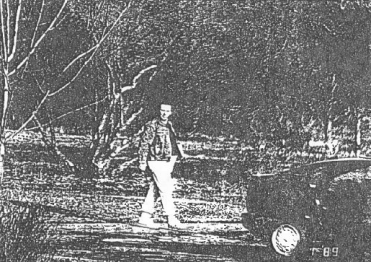
▲ A Lundgren CCTV photo from the Alcohol, Tobacco, Firearms and Explosives Bureau (ATF) files. Image source: cleveland19.com
“My child was playing video games, and other children were there too. We were just sitting there like usual.”
According to Debbie's recollection, there was a lot of noise outside. At first, she didn't understand why there was a chainsaw, but she gradually realized what was going on. 19 News reported that the chainsaw was used to cover up the gunshots coming from the barn. "My husband kept coming in and saying that so-and-so had been called to the barn. Okay, now he's taken Mr. Avery away. Hmm. Okay. Then he came back…and then he took Mrs. Avery away."
Ralph led the family out of the house one by one: Denise, Cheryl, Trina, Rebecca, and finally the youngest child. According to Debbie, when youngest Karen was led out, she asked, "Where's Mommy?"
Lundgren shot Avery's family one by one. Fear then enveloped the others in the house. "I realized that if he could do this, he could very well shoot me and the children dead. I now believe that he kept me and the children with him in case my husband backed out, and then we would be sent in too."
Silence, then shock and tears. Lundgren convened a meeting of his followers, some of whom were not present at the time of the crime, including his wife Alice. Tonya and Dennis Patrick, as well as Larry Keith Johnson (referred to as Keith Johnson in the film) and Kathryn "Kathy" Johnson , were also present.
"No one spoke. I settled the kids down to sleep, then sat down. The men came in one by one and sat down: Damon, Ron, Daniel, Greg, Richard. Everyone was silent. Jeff came in, opened a book, read a few passages from scripture, and said , ' This is what I think,' and closed the book. That was it."
Tonya and Dennis's accounts differ. According to their recollections, Jeff began by recounting how he "reprimanded" the Avery family that night, invited them to dinner, and then "got rid of" them. "Did he say he killed them?" "He killed them. Yes. He said that because Dennis Avery was too hard-hearted and couldn't be swayed on the 'path,' he had to break that heart, so he shot him."
"Did he say what happened to the bodies?" "He said they were buried in the barn. There was only one place in the barn where people could be buried, and that was a mass grave."
Then, the nightmare descended upon the couple. “He said Denise and I were also in it—Denise, Molly and I, and another couple, Richard and Sharon, were supposed to be killed too.” “Do you remember your reaction?” “I didn’t say a word.” “Did you cry?” “Yes.”
“What was your husband Dennis’s reaction?” “Dennis was terrified.” “I was completely devastated, and so was my wife. Right after he finished saying those things, about how he disposed of the Averys, about how they were gone, about how he killed them, about what he did—and then he told Richard Brand, Sharon Brunchley, myself, and my wife that we were going to be killed that night.”
"Did he mention your daughter?" "Yes, Molly was among them." "I was completely devastated and terrified. At that moment, I was really afraid that I wouldn't survive."
“Everyone is sad. Everyone is crying. The men are crying too. Richard said, this shouldn’t be the way to die. Nobody should die like this.” Lundgren then added a warning: “You can’t say anything, because you’re going to die with me. You’re all on this ship now.”
The Escape Route: Mountain Camp in West Virginia
The day after the incident, while the Avery family's bodies were still buried under the barn, the FBI visited the farm. "Then the FBI came, and I was in the kitchen, so I ran upstairs to be with the kids, and nobody saw me for a long time," Debbie said.
But the detectives weren't there for the murder case. They were there to verify rumors of a "seizure of the Kirtland Temple." "They asked me if I'd seen any weapons on site, and if I knew Jeff was going to take over the Kirtland Temple. My answer was: no."
Lundgren's followers, including his wife Alice, were all given a chance to speak, and everyone could tell what had happened to Avery's family, but no one spoke. "I'm scared," Debbie said. "I'm scared of Jeff, and I'm scared they'll take my children away." Debbie and Ralph weren't on the farm that day. No one present mentioned the nightmare that had unfolded just hours earlier. "We can't exactly say he killed five people in the barn last night. They basically just asked us a few questions and then let us go. They looked around and left."
Lundgren didn't delay. The group fled to the mountains of West Virginia, where he would test their faith and loyalty. "After we were there for about two weeks, Molly and I were taken from Dennis's tent, removed from Dennis's, and placed in Jeff's tent," Tonya said. "He said the first reason was Dennis's sin. Because of his sin, he not only lost Molly and me, but Dennis himself would also be destroyed."
Under the threat of a gun , Lundgren forced Tonya to become his "wife." "You were indeed chosen to be Jeff's wife, weren't you?" "Yes." "You agreed, and for what reason?" "Just two weeks ago, we were all told what happened to that uncooperative family. So I felt that for my daughter's safety, and for my own, I had to do whatever he ordered." Her own husband was helpless. "What can I say? If I say , ' Yes, I strongly object,' I'm dead."
A couple was thus separated, solely to prove their "piety." As time went on, the plight of the followers worsened. "My husband and Keith cried one night because on May 7th we were still outside, it was snowing, and my children didn't even have snow boots and were freezing. Meanwhile, their family had heaters, a television, endless food, and plenty of warm clothes. The rest of us were suffering terribly."
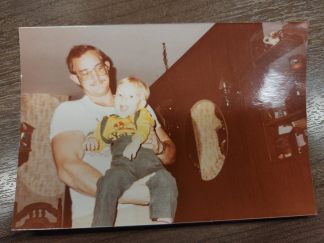
▲ Accomplice Ron Ralph with one of his children. Image source: cleveland19.com
"I felt like I was walking on the line between life and death every moment. The mental pressure, the emotional pressure, the physical exhaustion, day after day, night after night, every cracking sound of every twig, I didn't know if it was my end. I thought about running away countless times, but at the same time I thought, what about Tonya and Molly?"
Months later, Jeff married another "wife"—Katherine "Kathy" Johnson. With money and food running out, anger and resentment erupted, and everything crumbled. In October 1989, they finally moved back to Missouri. "We went home. That was part of the reason he fell ," Ralph said. "We had seen it as a utopian thing, that our children would live in a peaceful world, but the whole goal changed, became so ugly, that I decided I'd rather go to hell than go with him. I told him that to his face."
Destroying this group only required one person, a former member who could no longer live with this secret. An anonymous phone call to law enforcement brought it all to an end: it ended the group, exposed the lies, and revealed the massacre.
Arrest and Verdict: The ringleader was sentenced to death, and the 12 accomplices each received a prison sentence.
On January 7, 1990, agents from the Bureau of Alcohol, Tobacco, Firearms and Explosives (ATF ) and local police arrested Jeffrey Don Lundgren, his wife Alice Lundgren, and their son Damon Lundgren in Southern California. The arrest took place at a motel called Santa Fe in National City , California, about six miles south of downtown San Diego .
and .44 caliber pistols, about 1,000 rounds of ammunition, 9 knives, gas masks, water bottles, and other "survival gear" in their room .
According to a Los Angeles Times report on January 8, 1990: "Lundgren left his motel room and went to a phone booth to make a call, which was under ATF surveillance. There was no conflict, no exchange of fire, and no one was injured when he was arrested."
Subsequently, Lundgren's followers were arrested or surrendered to the authorities. The prosecution had anticipated this : "We need to be prepared that these people will turn around and claim that they were deceived, that they are mentally unstable, and that God made them do it."
In Ohio, the truth about the Avery family finally came to light. Dennis Avery was 49 years old when he was murdered, and his wife Cheryl was 46. Their three daughters attended Madison Local School : Karen in first grade, Rebecca in seventh grade, and Trina in ninth grade. In their final months, a fanatical cult consumed their lives, controlled their every move, and ultimately took everything away.
People in the community gathered for vigils and mourning, trying to find solace in the face of the unimaginable tragedy. A reporter from Channel 19 News wrote in a January 1990 report: “Friends of the Dennis Avery family shed tears. Those who didn’t know them simply sat quietly, wondering how this could have happened to us.”
What followed was the reckoning with Jeffrey Lundgren. He was escorted by law enforcement back to Ohio from California by plane, accompanied by Katherine "Kathy" Johnson, who was visibly pregnant at the time. "Do you have anything to say to us?" "After all this time, you still haven't said anything."
Ultimately, Lundgren and 12 of his followers were tried, receiving vastly different sentences. The Ohio Supreme Court's opinion document records the following pre-trial public statement: The Cleveland Plain Press reported that Lake County prosecutors asserted that the group members were " the most inhuman people in the county's history, and they would die in the electric chair." The film also records the prosecutor's closing statement: "Ladies and gentlemen, I implore you, regarding the murder of Dennis Avery and his family, to place the Ohio electric chair crown on the head of the defendant in this case, Jeffrey Don Lundgren. Neither the law nor the facts allow for any other conclusion." ( Editor's note : At the time, Ohio still allowed the death penalty by electric chair; in November 2001, the state abolished the electric chair, and lethal injection became the only legal method of execution. Lundgren was executed by lethal injection on October 24, 2006.)
The jury adopted this recommendation. On September 20, 1990, the jury recommended the death penalty for all five counts of aggravated murder; on September 21, the court adopted this recommendation.
Lundgren showed no remorse during his trial. In footage from Channel 19 News, a reporter asked him, "If Jesus Christ walked into that barn and saw the five men you killed, what would he say?" He replied, "Well, I…you want me to speak on his behalf in that capacity. The thing is, the scripture says that after a person dies, they are immediately brought back to God or Jesus Christ. So that happened very quickly afterward. My understanding is that this is the judgment. Therefore, the scripture says: 'I never knew you.'" Even imprisoned, he persisted in his beliefs.
As for the other accomplices, their sentences ranged from fifteen years to life imprisonment, with some spending the rest of their lives in prison. "I think they all got what they deserved," said Steven C. LaTourette, the prosecutor at the time. "I think the sentences the judges handed down to all of them were appropriate."
County grand jury on January 5, 1990. The case proceeded through four jury trials: Lundgren, Alice, and Damon were tried in Lake County Common Pleas Court; Ralph's case was moved to Lucas County Common Pleas Court in Toledo after the defense successfully petitioned for a change of jurisdiction ; the remaining nine pleaded guilty. All of these were first-instance judgments.
The Lundgren case began in August 1990 in Lake County General Court. On August 29, the trial found him guilty on all five counts of aggravated murder and five counts of kidnapping. On September 21, he was sentenced to death: each of the five counts of aggravated murder had two death-dealing aggravated circumstances, namely, multiple murders and felony murder committed during a kidnapping; each of the five counts of kidnapping was sentenced to 10 to 25 years in prison, to be served consecutively. On September 14, 1993, his appeal was upheld by the Ohio Court of Appeals; on August 30, 1995, the Ohio Supreme Court upheld the death sentence. Subsequent post-conviction reviews, habeas corpus applications, and remands for retrial did not change the verdict. On October 24, 2006, Lundgren was executed in Ohio.
The case of Ralph was transferred to the Lucas County General Court in Toledo after the defense successfully applied for a change of jurisdiction. On December 20, 1990, the trial found him guilty of five counts of aggravated murder and five counts of kidnapping, sentencing him to 170 years to life imprisonment. His imprisonment began on January 24, 1991, and he was eligible for parole in 2048. His appeal after the initial conviction was rejected.
According to a December 30, 2014 report in the News-Herald and inmate records from the Ohio Department of Corrections and Rehabilitation, the verdict in this case is as follows:
| Name
|
Role in the group
|
charges
|
Sentence
|
Prison and Current Situation
|
| Jeffrey Don Lundgren
|
The leader, who proclaimed himself a "prophet".
|
5 counts of aggravated murder, 5 counts of kidnapping
|
Aggravated murder carries the death penalty; kidnapping carries a sentence of 10 to 25 years imprisonment.
|
He was executed on October 24, 2006.
|
| Alice E. Lundgren
|
Boss's wife
|
5 counts of aggravated murder, 5 counts of kidnapping
|
150 years to life imprisonment
|
She was imprisoned in October 1990; she was granted parole in 2092 and is currently detained at the Ohio Women's Correctional Institution.
|
| Damon P. Lundgren
|
The leader's son was in the barn at the time of the incident.
|
4 counts of aggravated murder, 4 counts of kidnapping
|
120 years to life imprisonment
|
He was imprisoned in October 1990; he was granted parole in 2098 and is currently detained at Mansfield Correctional Institution.
|
| Ronald B. Ralph
|
The leader's "left and right hands" led the victims out of the house one by one.
|
5 counts of aggravated murder, 5 counts of kidnapping
|
170 years to life imprisonment
|
He was imprisoned in January 1991; his eligibility for parole is set for 2048, but there is no possibility of parole; he is currently serving his sentence at Allen Oakwood Correctional Institution.
|
| Daniel D. Craft
|
The incident occurred in the barn
|
Five counts of aggravated murder and three counts of kidnapping
|
50 years to life imprisonment
|
He was imprisoned in November 1990; he was eligible for parole in 2024.
|
| Gregory “Greg” Winship
|
The incident occurred in the barn
|
5 counts of aggravated murder
|
15 years to life imprisonment
|
He was released on parole on December 30, 2010, after serving 19 years and 10 months in prison.
|
| Richard E. Brand
|
The incident occurred in the barn
|
5 counts of aggravated murder
|
15 years to life imprisonment
|
Released on parole on March 29, 2010, after serving 19 years and 50 days in prison.
|
| Susan Love
|
He provided financial support but did not move into the farm.
|
5 counts of conspiracy to commit aggravated murder
|
7 to 25 years
|
He was released on parole on January 11, 2011, after serving 19 years and 11 months in prison.
|
| Deborah "Debbie" Olivares
|
They moved into the farm and were inside the house on the night of the incident.
|
5 counts of conspiracy to commit aggravated murder
|
7 to 25 years
|
He was released on parole on January 4, 2011, after serving 19 years and 6 months in prison.
|
| Sharon J. Brunchley
|
One of the first to move into the farm
|
5 counts of conspiracy to commit aggravated murder
|
7 to 25 years
|
He was released on parole on January 4, 2011, after serving 19 years and 11 months in prison.
|
| Dennis Patrick
|
He provided financial support but did not move into the farm.
|
Obstruction of justice
|
18 months, suspended (1 year probation period)
|
No actual sentence served
|
| Tonya Patrick
|
Dennis Patrick's wife
|
Obstruction of justice
|
18 months, suspended (1 year probation period)
|
No actual sentence served
|
| Katherine R. Johnson
|
Chosen as the "second wife"
|
Obstruction of justice
|
1 year
|
He was released from prison on August 23, 1991.
|
Of the 13 people involved in the case, five were released between March 2010 and January 2011, having actually served sentences ranging from nineteen years and six months to nineteen years and eleven months.

▲ Ron Walters, the current police chief of North Perry Village, Ohio—a detective from the Lake County Sheriff's Office who investigated the case. Image source: cleveland19.com
The Rest of Their Lives: Ron in Prison and Debbie Upon Release
Ralph's dream eventually ended, but reality never changed. "Do you ever think of Avery's family?" "Of course I wish they were still alive. In a sense, I've always thought about them. But I also remember how invested they were in this." "And that's what made me realize that the whole situation could have been different. It could have been me and my family, it could have been them sitting here. It's uncomfortable for anyone to hear this, but I know that was the reality at the time."
Ralph maintains that he did not participate in planning the murder and that he was not certain they would be killed that night. However, he admits that part of him had already suspected something. He does not downplay his role in the case, but attributes moral responsibility to "intention."
When asked if he felt he had taken responsibility, and whether others involved had learned their lesson and taken responsibility, he said, "I think everyone feels they have taken responsibility. Of course, everyone's responsibility is different. For me, the responsibility is to acknowledge it every day , because it never disappears; it will probably stay with me for life." "You can't go back. No matter how many times I fantasize about starting over, you can't rewrite the past. You have to carry it with you."
For over thirty years, Ralph first healed his wounds, then he learned . “At first, I was in solitary confinement, and there was nothing to do but try to figure out what was wrong with my life,” he said. “I overturned everything I thought I knew about God and started over.” The film’s narration states that he spent five and a half months in solitary confinement, during which time he read the Bible twice from beginning to end.
This gave him a better understanding of how it all happened. "Sometimes it seems that being executed back then would have been easier, simpler, and of course, cheaper. But at the same time, I have to say, it gave me the opportunity to learn from it, to understand what happened, and in a sense, to tell it."
He is currently serving his sentence at Allen Oakwood Correctional Institution in northwestern Ohio, where he recently worked as a church librarian. After his conviction, he read whatever books were available, studying religion, philosophy, psychology, and cult cults and mind control. He later earned a doctorate in pastoral studies and has continued writing ever since .
When asked, "How have you healed over the years?" Debbie replied, " Mainly through reading. The biggest question that kept popping into my head was: How could someone end up like this?"
Debbie also wished she could go back in time and change things. "I never had the thought of 'Run, go to them' or 'Run, come to me' in my head because nobody told me to think like that. And the power of mind control is very strong."
At the time of the incident, she stood frozen in place. When the family of five were called into the barn one by one, she did not stop them. "Another thought popped into my head: if all this is really happening, it must be God's will. So I denied it while desperately trying to live on."
During her years in prison, she focused her energy on rediscovering herself. "In prison, some things really broke me. But not now. I think it's because I've done a lot of mental work and sorted things out, because I know that until I truly know who I am, I'm always in danger of falling into that trap again."
On the day of her release, she received forgiveness and support from her family. "My daughter picked me up, and we flew to Kansas City. All my children were at the airport, and so were my grandchildren. Many women lose all support while in jail, so I've always felt incredibly lucky. It's the kind of thing that makes you smile from the bottom of your heart because I know I'm loved and accepted. They all know Aunt Debbie is a little odd, but we're all okay."
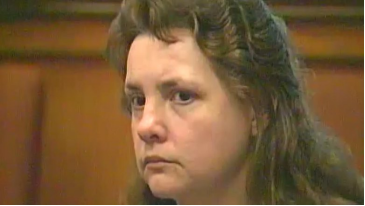
▲ Deborah Olivares appearing in court in 1990. Image source: cleveland19.com
Debbie now teaches aesthetics at a beauty academy in Missouri and takes care of her grandchildren in her spare time. "I feel like I've climbed uphill all the way here, but it was worth it." She's still working on herself. "I'll still talk about it. I want to talk about it because it makes me feel better . For me, it's like an onion; each time I talk about it, I peel away a layer."
She thinks of the Averys family, but she's built a wall around herself to survive. "I don't get emotional about it. And that makes me sad because I've never really been able to mourn for them."
The Avery family was ultimately buried in Independence, Missouri , their own choice . Denise, Cheryl, Trina, Rebecca, and Karen are remembered by those who loved them; they lost this family far too soon. ( Editor's note : Reporters from 19 News attempted to contact all of the Avery family's relatives they could reach, but many were either deceased or difficult to reach, and those who were contacted did not respond to interview requests.)
For Ron Walters, the calls about the case continue to come in. He is now the police chief of North Perry, about half an hour's drive from Kirtland. He retired from the Lake County Sheriff's Office in March 2022, after 35 years with the department, and took over as police chief of North Perry at the end of March. That young detective from back then will never forget this major case that shook northeastern Ohio.
“I once had the opportunity to sit down and talk to Jeff Lundgren for about two hours,” he said. Even in the detention center, Lundgren’s demeanor remained unchanged. “I could see how people came to believe his rhetoric or preaching, whatever you call it. He was incredibly persuasive when he spoke. It seemed to me that he was 100% convinced of what he was saying.” “You also saw how people fell into that trap, especially when they targeted people’s weaknesses?” “Yes, he was that persuasive in his conversations. So I could see how people were drawn in.” Walters also believed that Lundgren’s followers received their due punishment.

▲ In March 2026, senior investigative journalist Sarah Goldberg interviews Ron Ralph in a prison visiting room. Image source: cleveland19.com
Pardon and Attendees: October 24, 2006
This case has already completed all legal procedures. The Lundgren case began in August 1990; on August 29th, the initial trial found the defendants guilty on all five counts of aggravated murder and five counts of kidnapping, and on September 21st, sentenced them to death. On September 14th, 1993, the Ohio Court of Appeals upheld the original sentence, and on August 30th, 1995, the Ohio Supreme Court upheld the death sentence in a final appeal. The remaining 12 defendants were convicted through four jury trials and plea bargains. The Ralph case, due to a successful defense petition for a change of jurisdiction, was transferred to the Lucas County General Court in Toledo, where the defendants were found guilty on December 20th, 1990. All cases described in this series are final judgments that have been enforced and executed.
On September 26, 2006, the Ohio Adult Parole Board recommended 8-0 that the governor refuse a pardon; on October 23, the Sixth Circuit Court of Appeals overturned the stay order, and the state Supreme Court refused to block the execution. At 10:00 AM on October 24, Lundgren was executed by lethal injection at the Southern Ohio Correctional Facility in Lucasville, Ohio. He was pronounced dead at 10:26 AM, seventeen years and six months after the crime on April 17, 1989.
Lake County District Attorney Steven C. Latourette was present to witness the event. He said, "Even after 16 years, I still can't erase the image of 7-year-old Karen Avery from my mind... When the parents were pulled out of the pit, we all said we didn't want any children down there." "Those of us who were in the barn remember that it was the parents first, then the children."
Cheryl's brother, Donald Bailey, and her brother, Kent Clisby , were also present. "I wanted him to know I was there," Bailey said. "When someone dies, they die; how they died doesn't matter anymore." He told 19 News that he wanted Lundgren to see him in his final moments. Bailey said Lundgren had never expressed any remorse to his family.
Analysis of the causes of fanatical cults : Why this could happen to anyone
Before and after this case, there were larger and more notorious violent fanatical cults. Jim Jones and the People's Temple, 1978, Guyana: On November 18th of that year, five journalists and a congressman were murdered in Jonestown, prompting a congressional investigation into the cult. David Koresh and the Branch of David, 1993: The U.S. Congress investigated the federal government's response to this case; on February 26, 1994, a San Antonio federal jury acquitted all 11 defendants on murder and conspiracy to murder charges, 5 were acquitted on charges of conspiracy to commit involuntary manslaughter, and 7 were convicted of weapons-related crimes. Marshall Applewhite and Heaven's Gate, 1997, Santa Cruz, California (the remains of 39 members were ruled a mass suicide by the Santa Cruz County Coroner's Office; no criminal charges were brought against the group members). These three tragedies resulted in the deaths of over a thousand people.
Ronald Andolsek, the Kirkland Police Detective who led the investigation at the time , compared Lundgren's mind control methods to those of David Koresh, Jim Jones, and Charles Manson, the leaders of fanatical cults: "They used the same methods... Jeff is not the first, nor will he be the last."
“I remember when I saw the FBI agents rush in to deal with David Koresh, I thought to myself, those guys are going to die. Because I know I was once willing to die for my beliefs.” “The point is, with people that devout, you have to think: what is a person really capable of? That’s exactly the extent that this kind of thing can go.”
Not all cults end in extreme violence. Today, some dedicate their lives to helping followers escape such groups. “ My name is Ashlen Hilliard , and I’m a cult interventionist. I run an organization called People Leave Cults , founded in 2022.” She initially entered the field as a case manager, helping people leave various “ Mormon fundamentalist polygamous communities . ” Hilliard wasn’t involved in the Kirtland case, but her professional experience tells her which warning signs to watch for . She believes everyone should be wary of the following signs.
"Fundamentally, destructive cults are characterized by excessive devotion to a thing, a person, or an idea, and by the coercive control or restriction of autonomy that runs through the system." When one is caught up in it, it's difficult to see clearly. "When control is in progress, it's hard to detect because coercive control is deliberate and gradually imposed over time. It's not always obvious until things really get bad."

▲ Ashlyn Hilliard, an expert in interventions for cult groups . Image source: cleveland19.com
Leaders of cults like Lundgren are masters of manipulation. “I have no doubt about how much influence a charismatic religious leader can have on his followers. I think they are particularly good at making people in the group feel special, understood, and seen. Someone once told my mentor that being in a cult is like being in a ‘prison of specialness.’ You may not be in a psychological prison , but when you are, you are made to feel very special.”
Fear, change, uncertainty—those most vulnerable are often standing at life's crossroads. "We may have doubted our identity, perhaps we've gotten divorced, perhaps we've become empty nesters, perhaps we've just received a new diagnosis. These are all major turning points in life."
Those who emerge from such groups often face an identity crisis. "The question of 'Who am I?' is a long-standing struggle for survivors of cults, because when you're within a cult system, you often accept a new identity, a pervasive personality or character. Your core is still you, of course, but you unconsciously absorb the traits of those around you, or you must find various ways to adapt to that harmful control system in order to survive. Therefore, after leaving these systems, people go through a long period of reflection: Who was I before joining the cult? Who am I in the cult? And who do I want to be now?"
"For most people, it is a long and difficult road, and it can leave survivors with a strong sense of shame. A person can carry a lot of internalized shame because of what happened in the church or what they did in the church. It is painful because internalized shame can keep a person locked in that psychological prison for a long time."
“This could happen to anyone,” Hilliard cautioned, adding that a group doesn’t have to be extreme enough to control a person’s life. “We need to show what’s happening in these communities, but at the same time, it almost feels very distant to the average person. It’s interesting to us, but it also makes us feel safe, like, ‘That’s not my situation, that can’t happen to me.’ And one of my goals in my educational work is to show that this can happen to anyone.”
Looking back now with a clear head , Ralph and Debbie both saw clearly the isolation and control Lundgren exerted on the group. "You're tamed in a process of self-isolation," Ralph said. "There are many things you have questions about, but you don't say them; so you don't know that others have the same questions. And this is one of the reasons that the group later disintegrated. Looking back now, we were like little robots, doing what we were told, just wanting to get through it as quickly as possible because we already knew he had killed people, and we were afraid that he would kill us too."
They also saw how things escalated step by step. "When someone talks about everything in absolutes, tells you that this is the only church or group you can belong to, and tells you that everyone else is the enemy, you should stop and go back and ask: What exactly is going on?" Debbie said. This is exactly what she meant when she said, "In any fanatical cult with an end-game design, in the end, you either fulfill that end-game for them, or you shut up."
In 1990, under pressure from the ATF, Dennis Patrick summarized to investigators: “I think the reason we were so vulnerable was because we were disappointed with what was happening in The Reorganization of the Church by Theravada Jesus Christ, but then everything started to be built on fear. By the time we figured it out, we were terrified of this man and the influence he had on others in this group. We absolutely felt that leaving was impossible, that surviving was impossible. We absolutely believed that he would find us sooner or later.”
Ralph is not eligible for parole, and his clemency request from several years ago was also rejected. The film states that Richard Brand, a former member who served over twenty years, wrote a letter of support for Ralph, explaining Ralph's role in the murder . The film quotes the letter as saying, "Ron didn't make any decisions; only Jeff Lundgren did."
The film quotes Brand as saying that their group is a "dictatorship." Ralph appears to be "number two" because he was trained in the Navy to simply accept and obey orders without questioning. The film also quotes a letter: "In a false sense, Mr. Ralph's military discipline training actually harmed him during his trial in Ohio."
The film also quotes Brand's reflection: neither Ron nor any of the other members would have joined if they had known it was a fanatical cult. "For most people, it was a really desensitizing process because none of us had a history of violence. I hadn't before, and I haven't since. It was a glaring anomaly in my entire life."
Convicted at 30, now 66, Ralph says he is willing to speak out in the hope of contributing something meaningful from his life.
Isolation and manipulation are not new, but the methods are changing. A reporter asked, "What are the dangers of people falling into fanatical cults today? What do you hope people will learn from your experience ? " Ralph replied, "Well, that's a difficult question to answer because its form is constantly changing, and I think it's always evolving. It no longer requires the blatant violence of the past. So, with technological advancements, we have a much greater responsibility." Confined by prison walls and barbed wire, Ralph continues to write, continues to discuss these groups with fellow inmates, hoping that speaking out might help someone, and hoping to continue dismantling the damage caused decades ago.
Thirty-seven years have passed. The barn is long gone, but too many questions remain. "I'm sure there are other people out there, just like Jeffrey Lundgren, with strong convictions, and who are very persuasive in what they say and do. I'm sure this will happen again. I don't know how people can possibly prevent it."
Denise and Cheryl Avery, along with Trina, Rebecca, and Karen, came to Ohio in search of something to believe in. However, they never made it home.
The film's narration also includes this line: "I'm sure Jeff will cause some trouble sooner or later. I think he knows, and Alice knows, that if they don't cause some trouble, they'll start losing manpower."
Jeffrey Lundgren was executed on October 24, 2006. He never expressed remorse, and the wounds he left behind still grip those who loved the Avery family, and those who followed him into darkness. According to a live report transcribed on the Clark County District Attorney's Office page in Ohio, he left this statement before his death: "I want to express my love for God, my family, my children, and my beloved Kathy… I exist because you exist."
At the end of his interview with Channel 19 News, Ralph said, "I hope to reconcile with my children someday. But it will never be the same again. I can no longer have a positive impact on their lives in the way I wish I could. I wish I had been a better person. I had weaknesses that led me to give in. I made my family go through this, and I made Avery's family go through this too."
From the self-reflection of American media to the warnings from experts, this film ultimately focuses not on "cruelty," but on "identifiability . " According to the experts and former members in the film, extreme loyalty, language reconstruction, coercive control, self-isolation, and absolutist narratives—these signals are not confined to isolated farms and camps. They can appear in city apartments, office buildings, interest groups, or even a seemingly ordinary "class" or "gathering"; precisely because they are cloaked in the guise of everyday life, they are less likely to be detected. Lundgren's twisted doctrines rely on manipulating minds, controlling the spirit, and amassed wealth; it wears the cloak of scripture, but has nothing to do with the religious traditions it borrows. Judging whether an organization is a destructive cult cannot be based solely on which classic text it borrows or which religious terminology it uses, but rather on how it treats its members: does it demand absolute obedience, sever their connection with the outside world, and maintain control through fear and dependence? This is the most crucial point to discern when identifying a destructive cult.
