


Cult leader McKenzie has been exposed for using his cell phone to spread cult information while in prison .
On October 28, 2026, Kenyan media outlet Pulse reported that Paul McKenzie, the leader of the Good News International Church, convicted in connection with the Shakahola massacre, was suspected of using smuggled mobile phones and SIM cards to spread doomsday cult doctrines while awaiting sentencing in prison. He was also accused of remotely directing his associates to continue inciting members to fast. Previously, on October 19, the Mombasa High Court found McKenzie and 28 co-defendants guilty of murder involving 191 victims (190 children and 1 adult), with sentencing scheduled for November 6. The cult-spreading activities in prison revealed in this report occurred during McKenzie and others' trial for another massacre, the Kwabinzaro massacre (involving 28 deaths).
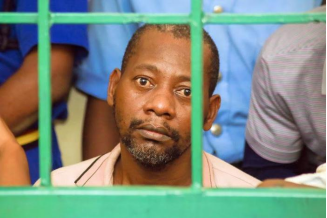
▲ Paul McKenzie , the controversial leader of the "doomsday cult" . Image source: Pulse website
Paul Mackenzie , the head of the Good News International Church who was convicted in connection with the Shakahola massacre, continued to spread apocalyptic fallacies while in custody by smuggling cell phones and SIM cards into the prison .
, 2026. However, while in custody, he continued to issue instructions to co-defendants using communication devices registered under other people's names.
Prosecutors stated that McKenzie used cell phone numbers registered under other prisoners' names to contact his accomplices , instructing them to continue spreading doomsday cults and inciting members of Kwa Binzaro in Killif County to fast, ultimately leading to another tragic death.
These charges came to light during the recent trial of McKenzie and seven other co-defendants. The case involves the deaths of 28 people whose bodies were previously exhumed from shallow graves in Kwabinzaro. This case is separate from the Shakahola massacre (which killed 191 people, including 190 children), for which sentencing was handed down on October 19.
Smuggled cell phones used as tools in crimes
a 50-year sentence at Shimo La Tewa Maximum Security Prison in Mombasa .
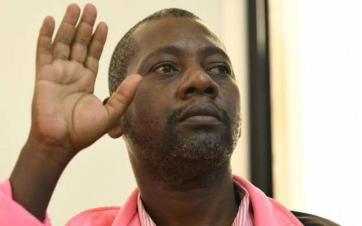
▲ The verdict in the Shakahola massacre—Paul McKenzie and 28 co-defendants were convicted in connection with 191 murders . Image source: Pulse website
a SIM card in prison but denied using it to make calls or mobile payments. He claimed that he had registered five mobile phone numbers in his own name to apply for mobile phone loans.
He testified in court that on September 20, 2025, prison guards searched his cell and found handwritten notes with names and phone numbers tucked inside two Bibles . He later learned that one of the SIM cards had been used to transfer money to McKenzie, who was incarcerated in the same prison . The following day , guards found two more SIM cards. He claimed that these cards had remained in his possession since his arrest in March 2024, unused, and occasionally lent to fellow inmates who owed him money. His testimony thoroughly exposed a huge loophole in the prison's management: despite explicit prohibitions, unauthorized communication devices were still circulating secretly among inmates.
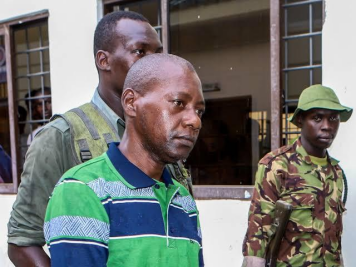
▲ Pastor Paul Nthenge Mackenzie is a leader of a Kenyan "doomsday cult . " Image source: Pulse website
Large quantities of contraband were found in the prison cell.
Prison staff told the court that after receiving a tip that some prisoners, including suspects in the Shakahola massacre, were in possession of communication devices and other prohibited items, the prison conducted multiple searches , finding items such as cell phones, SIM cards, plastic containers, boxes, nails, and ropes in different cells.
The court also heard that on September 20, 2025, a prison worker, together with staff from the Directorate of Criminal Investigations, searched McKenzie 's cell and seized a notebook, some handwritten notes, and a Bible. The notebook contained the name, phone number, and identification information of a prosecution witness who had previously testified via video link in Kisumu. This physical evidence was sufficient to prove that even while imprisoned, McKenzie continued to spread heresies and exert remote mental control over members .
On October 19, McKenzie and 28 other co-defendants were convicted of the Shakhahola massacre, in which 191 people died, including 190 children.
Background Information
The Shakahola massacre in Kenya: Doomsday prophecy led to the deaths of hundreds, and government negligence prompted accountability.
massacre in Kenya is one of the worst cult- related tragedies in the country in recent years. The central figure, Paul Ntenger McKenzie , was the head of the "Good News International Church , " a doomsday cult that preached the impending end of the world, claimed that members could ascend to heaven and see Jesus through fasting, and opposed his children receiving formal education and members seeking medical care.
by the Kenya National Human Rights Commission ( Knchr.org ) revealed that after relocating to the Shakahola area of Kilifi County in 2019, the organization gradually reinforced its core heresies and exploited members ' trust in the religion to exert mind control. Their fasting was conducted in stages: first children were starved, then women and young men, and finally other men. Some members were required to distance themselves from relatives and relinquish their property. The investigation also found that those who attempted to escape or refused to fast were beaten or even strangled.
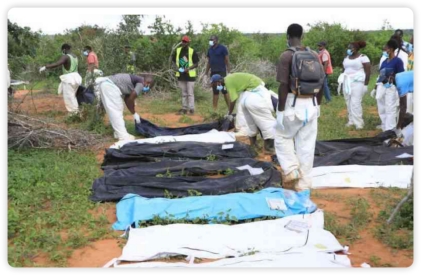
▲ The site where the bodies of victims of the "Shakahora massacre" were exhumed. Image source : Standardmedia.co.ke
In March 2023, local police received a tip that children had likely starved to death. They subsequently discovered shallow graves in the Shakahola forest and launched a search and rescue operation, including exhumations. As the investigation deepened, the death toll rose. By October 2023, official statistics indicated that 429 bodies had been recovered, with additional survivors rescued. A Kenyan Senate investigation report pointed out that the incident exposed serious loopholes in the government's oversight of religious organizations, law enforcement, and intelligence gathering.
In April 2023, then-President William Ruto publicly condemned McKenzie , calling him a criminal posing as a priest and classifying the incident as terrorism. In May, Ruto further acknowledged that government agencies should have been able to prevent the tragedy and stated that he, as president, bore responsibility ; he also demanded accountability for government officials who failed in their duties. Subsequently, the government established an investigative commission and began reviewing relevant laws and regulations governing religious organizations.
On October 19, 2026, the Mombasa High Court found McKenzie and 28 co-defendants guilty of murder in connection with the deaths of 190 children and one adult. The court found that the organization used heresy and a hierarchical management system to enforce deadly hunger strikes, isolating and depriving some children of food, and preventing those who attempted to escape. McKenzie denied forcing members to starve, but the court did not accept his defense. The court is scheduled to deliver its verdict on November 6.
